
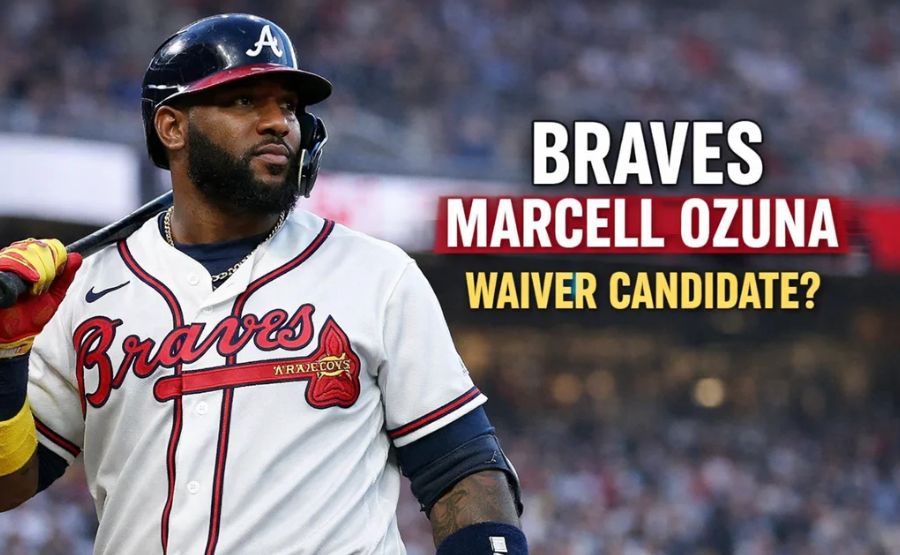
The communication of Marcell Ozuna waiver candidates has grown through the years as opposed to stemming from a single professional announcement. Multiple elements contributed to this dialogue, together with team roster barriers, agreement obligations, performance fluctuations, and the modern approach Major League Baseball businesses take while evaluating veteran players inside the course of transitional intervals.
Marcell Ozuna’s capability waiver popularity can not be understood through looking only at headlines or rumors. It calls for analyzing his time with the Atlanta Braves in context, thinking about how league regulations have an effect on roster selections, and understanding the strategic priorities of group control. Veteran gamers like Ozuna are often evaluated now not only for their modern average overall performance, however additionally for a manner they are healthy into lengthy-time period institution making plans, rate range issues, and the timing of the MLB season.
This combination of overall performance inclinations, settlement elements, and strategic timing is what has led analysts and fanatics to speak about the possibility of Ozuna being located on waivers. Understanding this broader picture allows clarify why Braves marcell ozuna waiver candidate has turned out to be a regular topic, highlighting the complexities in the back of roster manipulation selections in expert baseball nowadays.
Marcell Ozuna’s Role Within the Braves Organization
When Marcell Ozuna joined the Atlanta Braves, expectancies were high because of his verified potential as a center-of-the-order slugger. Known for combining electricity with run-producing consistency, Ozuna has become a vital part of the Braves’ lineup strategy. His presence inside the batting order did more than generate home runs; it prompted how opposing pitchers approached video games, regularly requiring them to pitch around him or adjust their pitch sequences to other hitters.
Over a couple of seasons, Ozuna showcased both elite offensive abilties and flexibility. He contributed with a solid on-base percent, the potential to pressure in key runs, and low grab hitting in tight games. Beyond stats, his revel in and veteran leadership supplied intangible value in the clubhouse, supporting more youthful players to navigate the pressures of Major League Baseball.
However, Ozuna’s profession with the Braves changed into no longer without fluctuations. Injuries, occasional slumps, and modifications in team roster composition affected his consistency. These ups and downs illustrate how player performance in MLB is hardly ever linear. By the time waiver discussions started, those performance versions had become a key part of the narrative, highlighting the balance among his contributions and the Braves’ evolving roster priorities.
See also “How the Eagles Rookie Trade Attempt May Change Their Game Plan“
How Waiver Talk Started Around Ozuna
In Major League Baseball, being known as a “waiver candidate” does not automatically imply a player is underperforming or undesirable. Instead, the time period frequently indicators that a crew is evaluating all available options, in particular while managing veteran players with tremendous contracts. Waiver discussions tend to heighten for the duration of the mid-to-past due season, when companies reassess competitiveness, roster space, and economic flexibility for the destiny.
Marcell Ozuna shaped this profile perfectly. His settlement size, age, and role as a designated hitter made him a natural subject for evaluation. Analysts and group insiders regularly recall elements along with capacity trades, profits alleviation, or opportunities to offer younger talent extra playing time. For the Braves, exploring waiver alternatives for Ozuna was a strategic step, making sure the group should balance instant competitiveness with lengthy-term roster planning.
The communication around Braves marcell ozuna waiver candidate displays the complexity of group choice-making in expert baseball. It indicates that front offices are continuously weighing performance metrics, financial commitments, and destiny ability, rather than surely judging a player’s fee at face value.
Performance Context and How It Shaped Perceptions
Marcell Ozuna’s performance for the duration in question remained constantly competitive, even if it no longer constantly matched the highs of his peak seasons. He persevered to generate runs, hit for power, and keep a first rate on-base percentage, demonstrating that his offensive competencies had been nevertheless very a whole lot powerful. The perception of decline often comes from comparisons in preference to actual output—when a participant has previously carried out at an elite level, even solid numbers can seem underwhelming.
This belief gap played a major position in discussions approximately waivers. Analysts and lovers often examine gamers no longer simply on uncooked statistics however on how those numbers fit into crew expectations, roster wishes, and league averages. For instance, whilst Ozuna’s home run totals or RBI numbers might have been slightly lower than his personal exceptional, his capacity to produce in key conditions still supplied tangible benefits to the Braves’ lineup. This assessment between expectation and performance created differing narratives—a few regarded him as expendable, even as others identified his ongoing price as a constant contributor in a transitional roster.
Furthermore, veteran gamers like Ozuna are often evaluated in the broader context of team strategy. Their consistency, capacity to mentor more youthful teammates, and effect on lineup intensity are as vital because of the data themselves. The communication around Braves marcell ozuna waiver candidate highlights how belief frequently balances against measurable performance, illustrating the complex judgment calls that front offices ought to make.

The Impact of the Designated Hitter Role on Waiver Considerations
One diffused but influential element in waiver discussions was Ozuna’s function as a chosen hitter. Unlike function gamers who can make contributions defensively throughout more than one spot, Ozuna’s fee changed into almost completely tied to his bat. In today’s MLB, versatility has emerged as more and more crucial, and teams often prioritize players who can fill more than one role. A professional, irrespective of how professional offensively, can restrict roster flexibility.
For the Braves, having a complete-time special hitter worked properly while the surrounding lineup became healthy and producing, letting them maximize offensive output without shielding trade-offs. However, whilst accidents or underperformance occurred someplace else on the roster, dedicating a spot exclusively to a DH carried an opportunity cost. Every roster move needed to not forget each immediate effect and longer-time period flexibility, including capability trades, promotions from the minors, or cost-saving strategies.
This does not decrease Ozuna’s offensive contributions; alternatively, it reframes how control evaluates his basic cost. Discussions about the Braves marcell ozuna waiver candidate scenario have been pushed in element by those strategic concerns, displaying that roster selections for veteran players often involve weighing specialized talents against adaptability, financial commitments, and destiny planning.
Contract Timing and the Pressure It Creates
In Major League Baseball, the shape and timing of a participant’s settlement can shape choices as an awful lot as their on-discipline overall performance. Marcell Ozuna’s contract placed him in a class that draws more interest as it nears its conclusion. Teams automatically compare expiring deals to determine whether the participant’s manufacturing justifies the economic dedication and how that aligns with lengthy-term organizational goals.
For Ozuna, the dialogue wasn’t simply about performance; it additionally considered economic flexibility, potential roster actions, and the Braves’ strategic course. Expiring contracts spark off questions like whether to retain veteran talent for fast competitiveness or to open opportunities for more youthful, cost-controlled players. These reviews are particularly vital for groups balancing playoff aspirations with budgetary limits.
The idea of waivers entered the communique as a tactical choice in preference to a decisive action. Waivers allow a group to check the market, gauge hobbies from other franchises, and explore options without committing to a change or release. In Ozuna’s case, the timing of his agreement made him a natural difficulty of hypothesis, reflecting how the enterprise side of baseball regularly intersects with overall performance exams and strategic choice-making.
Why Waivers Are Often Misunderstood in MLB
Waivers are one of the most generally misunderstood mechanisms in Major League Baseball. Fans occasionally count on that being categorised a waiver candidate alerts poor performance or failure, but in fact, waivers are a standard device for roster management and economic planning. They permit teams to evaluate interest league-wide, unfastened up roster spots, or manage payroll duties in a manner that aligns with strategic objectives.
For veteran gamers like Ozuna, acting in waiver discussions is regularly about timing in preference to ability. Late-season waivers generally tend to involve recognizable names due to the fact those players bring contracts giant enough to steer both competitive and economic decisions. The mention of Braves marcell ozuna waiver candidate reflects this sample: it’s far a verbal exchange about opportunities, flexibility, and team planning rather than a critique of ability or contribution.
Understanding waivers in this context highlights the complexity in the back of roster control. Teams should weigh multiple factors—settlement size, marketplace interest, potential trades, and lengthy-term strategy—before making choices, displaying that inclusion in waiver speech is a calculated step instead of a reflection of a player’s fee.
Clubhouse Influence and Intangible Contributions
Marcell Ozuna’s fee to the Braves went a long way past facts. Veteran players like him often provide management, enjoyment, and stability which can’t be quantified in traditional metrics. Ozuna’s presence helped set the tone for education, attention, and in-game choice-making, especially for younger players adjusting to the pressures of Major League Baseball.
His impact modified into mainly important in some unspecified time in the future of intervals at the same time as the organization confronted accidents, slumps, or surprising lineup adjustments. By preserving professionalism and composure, Ozuna helped the Braves navigate traumatic situations at the same time as retaining morale excessively. Removing an applicable offensive contributor in easy phrases for procedural reasons, which include evaluating waiver alternatives, could have disrupted this sensitive stability. In essence, his clubhouse contributions—mentorship, situational interest, and regular method—presented the Braves a strategic gain, reinforcing why his position extended well beyond his bat.
Veteran leadership in MLB often affects how a team capabilities off the field, influencing exercise conduct, verbal exchange between pitchers and hitters, and the overall culture of obligation. For the Braves, preserving Ozuna meant preserving a solid environment in which both pro and emerging players should thrive.
Balancing Financial Considerations and Competitive Integrity
Roster selections are not often made on performance on my own; financial factors and aggressive priorities closely affect the procedure. Waiving a veteran participant like Ozuna can every so often provide minor payroll relief or open a roster spot, but it hardly ever gets rid of the total fee of a contract. The Braves needed to weigh whether or not those capability financial financial savings justified disrupting the lineup or changing crew dynamics mid-season.
Beyond budget, competitive integrity performed an important position. Teams are increasingly mindful of optics, fan notion, and keeping belief within the clubhouse. Letting a validated contributor end the season respects each player and the group’s aggressive environment. In Ozuna’s case, the selection balanced economic realities with the significance of retaining team cohesion, consistency in the lineup, and typical performance goals.
Strategically, retaining a veteran like Ozuna signals that the employer values each measurable consequence and intangible contributions. It demonstrates a technique that prioritizes lengthy-time period stability, competitive credibility, and the human aspect of the game, making sure that financial decisions do not undermine morale or performance.
Media Amplification and Fan Perception
When the word braves marcell ozuna waiver candidate started circulating, it quickly became a focus for media and fan discussions. In today’s sports environment, hypothesis spreads quicker than ever, amplified via virtual systems, social media, podcasts, and sports activities. Analysts regularly explore multiple “what if” situations, and fans react in actual time, debating implications and deciphering rumors as potential choices.
For Ozuna, this media amplification created a notion gap. Some fanatics interpreted the conversation as a critique of his capabilities or a demonstration of declining performance. Others considered it as a natural part of baseball’s evaluative manner, recognizing that groups often determine veteran gamers’ contracts, roster spots, and marketplace price. The intensity of the insurance underscores how recognizable names like Ozuna can dominate discussion, even when no formal group movement has come about. Speculation, as soon as seeded, can persist and develop, illustrating the electricity of media to shape narrative belief in ways that once in a while outpace truth.
Furthermore, modern-day insurance prospers on context and controversy. Stories that frame a player as a capability waiver candidate generate engagement, however they regularly emphasize “opportunity” as opposed to certainty. Understanding this dynamic facilitates making clear why conversations around Ozuna receive a lot of interest without any legitimate circulation.
What Actually Transpired
Despite weeks of speculation, Marcell Ozuna changed into in no way located on waivers through the Atlanta Braves. He remained a quintessential part of the roster, contributing offensively and fulfilling his contractual responsibilities through the give up of the season. The waiver narrative ended not with a transaction but with the organization selecting balance over experimentation.
This final effect illustrates the difference among evaluation and execution in MLB. Teams robotically hold in mind all possible options—trades, waivers, and roster adjustments—mainly concerning excessive-profile veterans. These opinions are part of strategic making plans, permitting management to weigh competitive, monetary, and roster implications. In Ozuna’s case, the Braves prioritized continuity, keeping each lineup consistent and clubhouse cohesion, as opposed to pursuing procedural maneuvers that would have disrupted institution dynamics.
The episode additionally highlights the importance of context in interpreting sports activities and sports data. Public hypothesis regularly magnifies theoretical options, but the real decisions are informed through a couple of things—team method, participant charge, settlement issues, and long-time period planning—underscoring that media narratives no longer normally replicate on the spot fact.
Transition From Waiver Discussions to Free Agency
Once Marcell Ozuna’s settlement with the Braves reached its conclusion, all discussions around Braves marcell ozuna waiver candidate successfully ended. Waivers observe best to gamers beneath active contracts, so while Ozuna became a free agent, the nature of the conversation shifted entirely. Teams had been not debating whether the Braves would possibly launch him; as a substitute, analysts, media, and fanatics commenced evaluating which companies may want to pursue him, what roles he might fill, and the way he could contribute to exceptional lineups.
This transition highlights the difference among procedural roster mechanisms and open-marketplace possibilities. Free business enterprise lets teams not forget a participant’s offensive manufacturing, revel in, and leadership without being restrained by means of waiver regulations or instantaneous roster implications. For Ozuna, this meant interest shifted from hypothetical roster maneuvers to true assessment: how his strength-hitting, veteran presence, and clubhouse influence may want to match into other teams’ aggressive techniques.
In addition, loose organisation delivered broader issues, along with contract duration, revenue needs, and capability positional roles. The communique evolved from “Could the Braves waive him?” to “Which teams can high-quality make use of Ozuna’s talents?” This shift illustrates how participant motion in MLB is cyclical, with performance, timing, and agreement status dictating the nature of evaluation at every degree.
What the Episode Reveals About Modern MLB Strategy
The story of Braves marcell ozuna waiver candidate gives a clean window into modern MLB roster management. Teams nowadays rely heavily on analytics, assessing every element from performance trends and age curves to payroll performance and roster flexibility. Veteran players like Ozuna are constantly evaluated, no longer simplest on past achievements however additionally on how their competencies align with the crew’s immediate and lengthy-time period goals.
However, the episode additionally underscores the limits of speculation. While media insurance and fan discussions often recognize hypothetical scenarios, actual-world choices are guided by more than numbers. Front workplaces should not forget human elements consisting of management, clubhouse chemistry, and the capacity effect on team morale. Respecting a player’s contributions, understanding crew dynamics, and balancing analytical insights with realistic judgment remain important to MLB selection-making.
In Ozuna’s case, the waiver hypothesis supplied insight into how groups method mid-season opinions, agreement timing, and capability roster flexibility. Yet the remaining outcome—his final with the Braves via the season and entering into an unfastened business enterprise—demonstrates that even high-profile discussions regularly do no longer translate immediately into movement. The episode highlights the delicate stability among analytics, method, and human judgment that defines modern-day professional baseball.
Ozuna’s Legacy With the Braves
Marcell Ozuna’s time with the Atlanta Braves left a mark that extends well beyond the quick-time period roster hypothesis. Even amid discussions, approximately braves marcell ozuna waiver candidate, his on-discipline contributions and veteran presence have been giant. He constantly furnished middle-of-the-order electricity, drove in key runs, and supplied snatch performances that helped the Braves continue to be competitive in tight video games. Opposing pitchers often needed to alter their method mainly to account for him, which in flip benefited the lineup as an entire.
Beyond records, Ozuna added management and stability to a team navigating transitions, accidents, and lineup modifications. His approach to guidance, mentorship of younger players, and capacity to preserve composure at some point of high-stress situations strengthened the Braves’ clubhouse tradition. These intangible traits contributed to group brotherly love and consistency, demonstrating that legacy is built not simplest on home runs or RBIs, however additionally at the have an impact on a player has on teammates and usual team overall performance.
Ultimately, regardless of the waiver speculation, Ozuna’s time in Atlanta stays defined with the aid of results and effect, ensuring that his position in shaping the latest Braves seasons is remembered as a tremendous and meaningful one.
Lessons From the Waiver Narrative
The narrative surrounding Braves marcell ozuna waiver candidate provides a clear instance of how modern-day baseball operations, media insurance, and fan notion intersect. The scenario illustrates that speculation often combines overall performance assessment, contract timing, and media amplification to create a story that might not fully align with real team selections.
For lovers, this episode highlights the importance of context and staying power. Evaluating a participant like Ozuna calls for information not just his records, but additionally his contract state of affairs, role in the lineup, and contribution to crew dynamics. For teams, it demonstrates the sensitive stability among preserving roster flexibility and respecting player continuity, making sure that selections serve each competitive and organizational goal. For players, it reflects the reality that hypothesis is a regular part of expert sports activities, mainly for veterans with sizable contracts and high visibility.
The Braves marcell ozuna waiver candidate episode ultimately underscores that roster discussions are multi-layered. Teams weigh analytics, human elements, and lengthy-term strategy, even as lovers and media may cognizance of quick-term opportunities. Understanding this dynamic provides insight into current MLB approach, displaying that speculation not often equates to definitive action, but it does screen broader developments in how gamers are assessed and valued.
Conclusion
The dialogue around Braves marcell ozuna waiver candidate highlights the complexity of modern-day Major League Baseball roster control. Ozuna’s scenario demonstrates that speculation, media narratives, and fan interpretation often intersect with performance metrics, contract concerns, and strategic crew making plans. While waiver speech can generate headlines and debate, the truth is that decisions about veteran players are hardly ever primarily based on an unmarried factor—their stability on-field contributions, leadership, monetary implications, and long-time period organizational desires.
Marcell Ozuna’s tenure with the Braves illustrates this stability. His offensive production, center-of-the-order power, and veteran presence furnished measurable cost, even as his management and balance contributed intangible advantages that reinforced the clubhouse and supported more youthful gamers. Even as rumors circulated, the Braves selected continuity over procedural experimentation, reflecting the careful assessment that drives MLB choice-making.
Ultimately, the Ozuna waiver narrative serves as a case observe in how professional baseball evaluates talent, manages contracts, and navigates the interplay among evaluation and human judgment. It reminds lovers, analysts, and teams alike that even as hypothesis is inevitable, a participant’s legacy is described by way of consistent overall performance, having an impact on the team, and the wider impact left at the business enterprise.
FAQs
1. What does it mean when Marcell Ozuna is called a Braves Marcell Ozuna waiver candidate?
Being labeled a waiver candidate does no longer mean a player is underperforming or unwanted. In MLB, it generally indicates that a group is comparing options consisting of roster flexibility, ability trades, or financial concerns. In Ozuna’s case, the time period contemplated strategic discussions rather than any decline in his competencies.
2. Why was there speculation about Ozuna being placed on waivers?
Speculation arose due to a mixture of things: his contract length, age, specific hitter role, and the Braves’ evolving roster priorities. Analysts and lovers debated whether or not waiving him should lose up income, create opportunities for more youthful players, or offer greater strategic flexibility, making him a natural consciousness for discussion.
3. Did the Braves actually put Marcell Ozuna on waivers?
No. Despite considerable media and fan dialogue, Ozuna remained at the Braves’ roster via the stop of the season. The waiver conversation became purely hypothetical and a part of preferred MLB roster assessment, with the team prioritizing continuity over procedural experimentation.
4. How did Ozuna contribute to the Braves beyond his on-field performance?
Ozuna’s cost prolonged past information. He provided leadership, mentorship for more youthful players, and balance in the clubhouse. His presence helped hold group morale and cohesion throughout accidents, slumps, or roster adjustments, demonstrating that veteran contributions regularly cross beyond measurable stats.
5. What does the Ozuna waiver narrative reveal about MLB roster strategy?
The Braves marcell ozuna waiver candidate episode highlights how cutting-edge-day MLB teams balance analytics, financial making plans, and human factors at the same time as coping with rosters. It shows that speculation and media narratives won’t reflect actual crew alternatives, and that comparing veteran gamers consists of every performance and extended-term organizational planning.
Read more about Sports At Phrasecave