
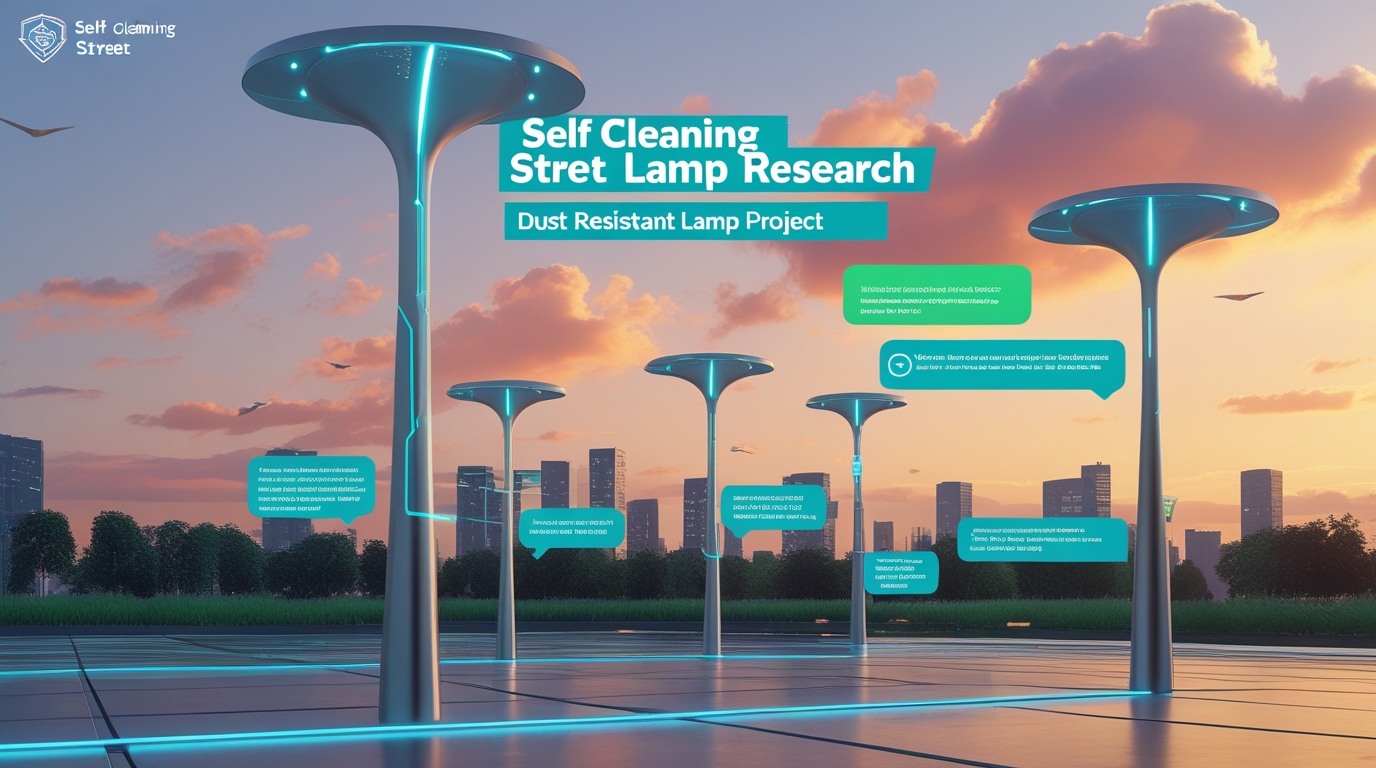
The keyword self cleaning street lamp research dust resistant lamp project exist represents a developing focus in modern city infrastructure. Around the world, engineers and metropolis planners are growing avenue light structures that resist dust buildup and smooth themselves with minimal human intervention. These innovations are not just theoretical; a couple of pilot tasks and practical implementations already display that dirt-resistant, self-preserving lamps are conceivable and effective.
Traditional street lamps often suffer from dirt, pollutants, sand, and harsh weather, which lessen brightness and energy performance. Frequent cleaning or alternatives will increase protection charges and may compromise protection and visibility. The studies in the back of self cleaning street lamp research dust resistant lamp project exist makes a speciality of solving those demanding situations sustainably. Advanced coatings, hydrophobic surfaces, automatic wipers, and airflow mechanisms are being tested to hold lamps clean without manual hard work.
This painting also supports smart metropolis goals and environmental responsibility. By maintaining consistent light output, those systems beautify public safety, enhance urban aesthetics, and reduce power waste. Solar-powered lamps benefit specifically from self-cleaning technology, which guard panels from dust accumulation and maintain ideal performance. Overall, self cleaning street lamp research dust resistant lamp project exist as a practical, revolutionary, and increasingly important solution for modern-day towns.
Why Dust Poses a Major Challenge for Street Lighting Systems
Dust is one of the maximum ignored however severe problems affecting outside avenue lighting. In many dry, semi-arid, or wasteland areas, airborne dirt continuously settles on the surfaces of lamp covers, LED lenses, and sun panels. In city or industrial zones, the trouble intensifies as dust combines with moisture, oil, and pollution to form stubborn grime that is difficult to dispose of. Over time, these layers block mild output and, in solar-powered lamps, extensively reduce the efficiency of solar panels in converting sunlight into power.
Even a thin coating of dust can extraordinarily lower illumination tiers and strength era. Lamps blanketed in dirt may also shine dimly, forcing the machine to rely greater on battery storage, which will increase put on the battery and shorten its lifespan. The results increase beyond strength inefficiency: poorly lit streets compromise public safety, have an effect on traffic visibility, and might create higher lengthy-time period renovation fees.
Manual cleansing of road lamps is feasible, however it comes with excessive prices, exertions requirements, and often falls at the back of due to budget boundaries. This ongoing venture has made self cleaning street lamp research dust resistant lamp project exist a critical attention in modern-day urban infrastructure. By addressing dust accumulation through revolutionary layout and materials, those tasks aim to maintain ideal overall performance while decreasing human intervention and operational charges.
See also “Dubolsinho Insights: Everything You Should Know“
The Core Concept Behind Self-Cleaning and Dust-Resistant Lamps
The essential precept behind self cleaning street lamp research dust resistant lamp project exist is easy: street lamps should actively withstand environmentally demanding situations in place of depending totally on human preservation. In distinctive terms, the lamp itself should contribute to staying clean and completely sensible.
Modern designs approach this aim in ways. Some interest in prevention, the use of precise coatings, hydrophobic surfaces, and anti-static materials that make it tough for dirt, dirt, or dust to stick. Others focus on automated elimination, the use of built-in mechanisms like small wipers, vibration systems, air jets, or surface tilting methods that clean collected dirt without guide intervention. In many initiatives, these strategies are blended to make a dual-layer method: prevention and automatic cleansing.
Research and subject trying out show that such measures significantly beautify lengthy-time period lamp performance. Clean surfaces ensure maximum light output, ordinary illumination for pedestrians and vehicles, and better solar energy absorption for sun-powered devices. Beyond technical overall overall performance, these innovations lessen safety costs, make lamp lifespan bigger, and are a useful resource for environmentally sustainable city development.
By integrating the ones ideas, self cleaning street lamp research dust resistant lamp project exist solutions are moving from experimental requirements to sensible reality, proving that cities may have smarter, greater reliable, and decrease-renovation lighting fixtures structures even in harsh or dusty environments.
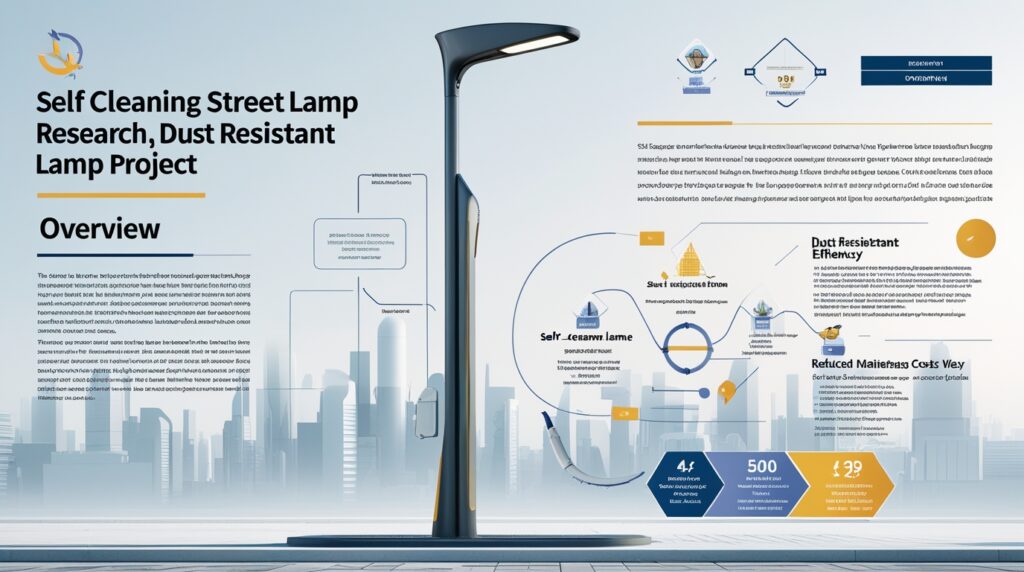
Materials Innovation and Surface Engineering: Enhancing Dust Resistance in Street Lamps
One of the most impactful areas in self cleaning street lamp research dust resistant lamp project exist revolves around substances technology and floor engineering. The purpose is to create lamp surfaces that obviously face up to dirt accumulation, lowering preservation needs at the same time as ensuring constant lights overall performance. Researchers have grown to come to nature for suggestions, reading how lotus leaves, butterfly wings, and sure insect exoskeletons remain clean despite constant publicity to dirt and moisture. By mimicking those systems, engineers can lay out micro- and nano-textured coatings that extensively reduce particle adhesion.
These coatings are now not handiest to lamp covers however also to LED lenses and solar panels. In wet climates or regions with excessive humidity, water droplets can wash away dirt, taking advantage of the hydrophobic or water-repellent floor houses. In arid or wasteland areas, where rain is scarce, the textured surfaces allow even minor environmental vibrations, consisting of wind or passing traffic, to dislodge dirt evidently. This mixture of herbal design and engineering guarantees lamps remain brighter for longer and solar panels hold power performance.
Durability is an imperative difficulty in this research. Street lamps face years of ultraviolet radiation, heat and bloodless cycles, sand abrasion, and exposure to pollutants. To address this, scientists carry out expanded aging tests that simulate many years of wear and tear. The goal is to verify that coatings retain their dust-resistant properties under real-global situations. Modern research also explores hybrid coatings that combine dirt repellence with anti-corrosion residences, supporting lamps that withstand both particulate infection and chemical degradation.
By integrating superior substances with smart surface design, self cleaning street lamp research dust resistant lamp project exist initiatives can provide long-lasting, low-maintenance lights solutions suitable for harsh city and herbal environments. These substance improvements no longer simplest improve operational efficiency however also help sustainability by means of reducing electricity waste and decreasing cleaning-related carbon emissions.
Mechanical Self-Cleaning Systems: Automated Maintenance for Sustainable Street Lighting
Beyond floor engineering, mechanical structures shape any other cornerstone of self cleaning street lamp research dust resistant lamp project exist. These structures are designed to actively dispose of dust that has accumulated, making sure most effective overall performance through the years without counting on guide cleansing. Common mechanisms encompass rotating brushes, sliding wipers, small vibration modules, or even air jets constructed into the lamp housing. Sensors can trigger these systems while light output drops or in keeping with pre-set schedules, allowing lamps to preserve consistent illumination mechanically.
Solar road lamps benefit particularly from mechanical cleansing. During sunlight hours, solar panels regularly produce surplus energy. Part of this electricity may be diverted to function cleaning structures, ensuring that dirt does not accumulate and decrease power technology. Some designs comprise light-weight vibration automobiles that gently shake the panel or lens, even as others use miniature robotic brushes or wipers to get rid of first-rate particles. This method maximizes sun efficiency and ensures strength storage isn’t always compromised.
Field testing in actual-global conditions has shown large benefits. Lamps ready with mechanical cleaners maintain higher mild intensity over long periods, and batteries enjoy much less strain due to the fact that electricity is efficiently captured and stored. Engineers are also growing modular and low-upkeep designs to increase the operational lifestyles of these structures. By combining reliability with automation, mechanical self-cleaning systems supplement advanced coatings, developing a holistic option to dirt accumulation in outside lighting.
This twin approach—materials engineering plus mechanical cleaning—represents a large jump forward in urban infrastructure. It reduces protection charges, increases power efficiency, and ensures street lamps remain practical in challenging environmental conditions. Together, these strategies highlight why self cleaning street lamp research dust resistant lamp project exist is unexpectedly gaining attention as a realistic and sustainable answer for modern-day towns.
Smart Control and Sensor-Based Automation in Street Lamps
A key advancement in self cleaning street lamp research dust resistant lamp project exist lies in integrating wise managed structures and sensor era. Modern lamps are no longer passive devices; they actively display their personal overall performance. Sensors can track parameters including mild intensity, solar energy generation, surface cleanliness, and environmental dust stages. When dirt accumulation or decreased performance is detected, the system can automatically trigger a cleaning cycle without human intervention.
This automation no longer simplest ensures that lamps remain vivid and green however also conserves energy via keeping off pointless cleaning. Mechanical additives, which includes wipers or vibration modules, function handiest while wanted, lowering wear and extending the lifespan of the lamp. In related lights networks, real-time records can be transmitted to metropolis renovation teams, permitting remote monitoring and predictive upkeep. This transforms street lights from a simple utility into an included, responsive part of urban infrastructure.
Intelligent managed structures are specially treasured in places which might be difficult, dangerous, or luxurious to get right of entry to for manual cleaning. By combining sensor-based total tracking with dust-resistant surfaces and automated cleansing mechanisms, self cleaning street lamp research dust resistant lamp project exist tasks gain a degree of self-sufficiency that improves reliability, lowers operational expenses, and enhances city safety.
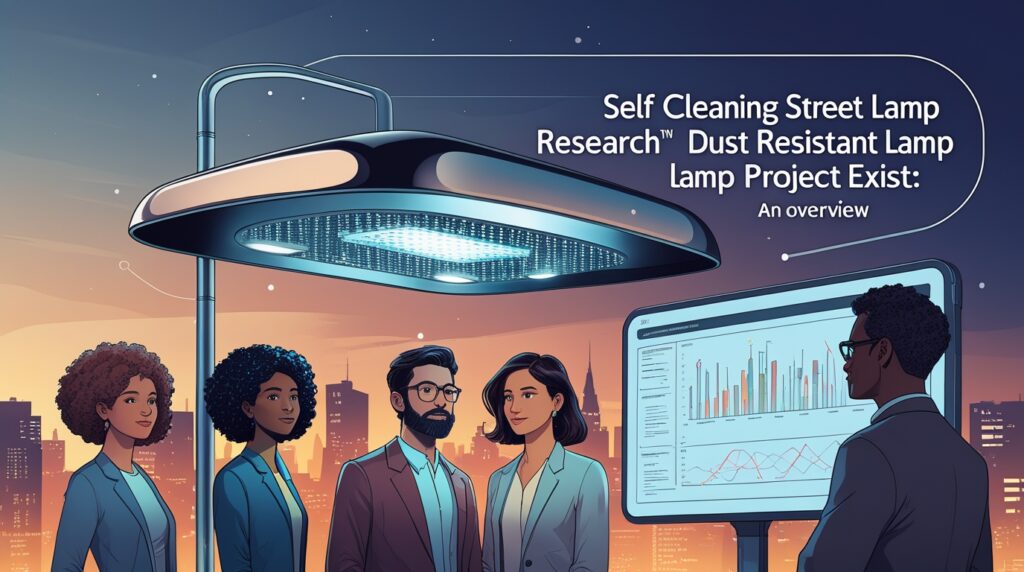
Real-World Projects and Practical Applications
The query behind self cleaning street lamp research dust resistant lamp project exist is whether or not these ideas are nonetheless theoretical or in the event that they have been efficaciously carried out. The answer is apparent: more than one actual-world implementation exists these days. Pilot projects, industrial products, and research prototypes are already working in towns and areas that face excessive stages of dirt, pollutants, or harsh environmental conditions.
In regions vulnerable to dirt storms or heavy particulate exposure, self-cleansing sun street lamps had been hooked up to assess long-time period effectiveness. Field information consistently shows that these lamps keep better brightness over extended durations and notably lessen the need for renovation visits. Municipal authorities report that despite the fact that these systems can also require a better preliminary investment, the financial savings from decreased exertions, strength performance gains, and longer gadget lifespan quickly offset in advance prices.
Academic and enterprise research keeps pushing the boundaries of these technologies. Studies explore new combos of superior surface coatings, computerized cleansing mechanisms, and clever control algorithms. These experiments generate vital performance records, refine operational strategies, and tell future lamp designs.
Together, these real-world programs confirm that self cleaning street lamp research dust resistant lamp project exist isn’t always exist. It is a growing subject of sensible innovation that provides safer, extra reliable, and strength-green street lighting answers, mainly applicable for city and far flung environments facing environmental challenges.
Economic and Environmental Advantages of Self-Cleaning Street Lamps
The adoption of self cleaning street lamp research dust resistant lamp project exist technologies offers giant economic and environmental advantages. On the financial aspect, considered one of the biggest costs for public lights is ongoing maintenance. Conventional street lamps require ordinary inspections, cleaning, and low issue substitutes, each involving hard work prices, vehicles, fuel consumption, and protection system.
Self-cleaning street lamps limit these routine interventions. Automated cleaning mechanisms and dirt-resistant surfaces reduce the frequency of manual protection, leading to lower operational fees over the life of the device. For towns deploying lots of lamps across huge urban areas, even modest enhancements in efficiency can bring about vast financial savings through the years. Reduced renovation additionally frees up municipal resources for different crucial infrastructure desires, making the technique sensible as well as price-powerful.
Environmentally, these systems assist sustainable urban improvement. Clean sun panels seize sunlight more correctly, producing renewable electricity and lowering dependence on electricity constructed from fossil fuels. Fewer service trips for cleaning or maintenance lessen automobile emissions, contributing to lower carbon footprints. In this way, self cleaning street lamp research dust resistant lamp project exist aligns both with weather movement desires and with the transport of reliable, strength-green public services.
Technical Challenges and Ongoing Research
Despite the clean blessings, ongoing studies in self cleaning street lamp research dust resistant lamp project exist is essential because numerous technical demanding situations continue to be. Mechanical cleansing structures have to be engineered to operate reliably over a few years without common failures. Dust-resistant coatings need to maintain effectiveness under consistent publicity to ultraviolet radiation, temperature extremes, and abrasive particles. Smart manipulate systems need to stabilise power intake with cleaning performance to ensure performance isn’t always compromised.
Cost is any other essential component. While lengthy-term savings are sizable, the preliminary installation of superior self-cleansing lamps can exceed that of conventional devices. This has led researchers and producers to awareness on scalable designs and price-effective substances that make these answers possible for cities with constrained budgets.
Rather than acting as limitations, those demanding situations power innovation. Each pilot project, field take a look at, and research look at contributes precious insights that refine design, enhance reliability, and beautify overall performance. Over time, those iterative enhancements are paving the way for broader adoption, demonstrating that self cleaning street lamp research dust resistant lamp project exist is not just a concept however a realistic, sustainable answer for modern-day city infrastructure.
The Future of Self-Maintaining Street Lighting
The outlook for self cleaning street lamp research dust resistant lamp project exist indicates that such technology will soon shift from revolutionary experiments to traditional additives of current-day town infrastructure. As towns increasingly adopt smart structures and renewable power answers, the need for road lighting fixtures that calls for minimum upkeep while last reliable will best increase.
Future road lamps are expected to mix multiple current functions. Advanced ground materials, able to repel dirt and dirt, will in all likelihood be paired with wise manipulated structures that screen performance in actual time. Predictive maintenance algorithms might also need to count on dust accumulation, mechanically starting up cleaning cycles in advance than efficiency drops. Adaptive structures can also alter cleansing schedules based on seasonal dirt inclinations, neighborhood climate situations, or weather forecasts, making sure choicest performance is three hundred and sixty five days-round.
As studies progress and manufacturing scales, the fee of these self-maintaining lamps is anticipated to lower, making them viable for a wider range of municipalities, which include smaller towns and developing areas. Beyond price performance, these upgrades promise more sustainable, strength-green, and dependable road lighting networks that guide public safety, lessen environmental effect, and decorate urban aesthetics.
With non-stop improvements in substances, sensors, and automation, a self cleaning street lamp research dust resistant lamp project exist is poised to end up a cornerstone of the smart cities of the future, demonstrating how technology can remedy practical demanding situations even as helping sustainable town development.
Conclusion
The development of self cleaning street lamp research dust resistant lamp project exist marks a primary advancement in city infrastructure. By combining superior surface materials, mechanical cleansing structures, and clever automation, these lamps correctly tackle the persistent problem of dirt accumulation. This ensures consistent mild output, progressed power performance, and longer lifespan, specifically for sun-powered street lighting.
Real-international initiatives and pilot implementations have tested that self-cleansing, dust-resistant street lamps aren’t simply theoretical concepts. They lessen renovation expenses, decrease exertion necessities, and enhance public safety via preserving streets that are always nicely-lit. At the same time, those technologies guide environmental sustainability via lowering electricity waste and car emissions related to manual preservation.
As generation advances and production becomes more value-effective, these self-retaining avenues lamps are predicted to end up general throughout towns globally. By integrating predictive protection, adaptive cleansing, and intelligent sensors, self cleaning street lamp research dust resistant lamp project exist gives a sensible, sustainable, and dependable solution for present day urban lights, shaping the future of clever town infrastructure.
FAQs
1. What is the concept behind self cleaning street lamp research dust resistant lamp project exist?
The concept makes a speciality of designing road lamps that could preserve themselves with minimal human intervention. Through dust-resistant coatings, hydrophobic surfaces, and mechanical or sensor-based cleansing structures, the lamps stay splendid, energy-green, and sturdy, even in dusty or harsh environments.
2. How do self-cleaning street lamps improve energy efficiency?
Dust accumulation on lamps and sun panels can lessen moderate output and lower sun electricity absorption. Self-cleaning designs keep surfaces clean, making sure most illumination and green power use. This reduces battery stress in solar lamps and lets cities keep on strength prices.
3. Are self-cleaning street lamps currently used in real-world projects?
Yes. Multiple pilot initiatives, corporation installations, and studies prototypes are already operational in areas liable to dirt, pollutants, or excessive climate. These implementations have demonstrated higher brightness, reduced preservation, and longer device lifespan in comparison to traditional avenue lamps.
4. What are the environmental benefits of these lamps?
Self-cleansing lamps contribute to sustainability through reducing electricity waste, minimizing vehicle emissions from manual preservation visits, and increasing the lifespan of lighting fixtures infrastructure. Solar-powered versions moreover generate renewable electricity greater efficaciously, supporting green metropolis obligations.
5. What challenges still exist in developing self-cleaning street lamps?
Technical demanding situations include designing mechanical systems that remain for years, preserving the effectiveness of dust-resistant coatings beneath severe climate, and balancing energy use with cleaning overall performance. Cost is also a thing, as those superior lamps may be greater luxurious in advance, even though long-time period financial savings offset the preliminary investment.
Read more about Blog At Phrasecave
 Backlinks Hub