
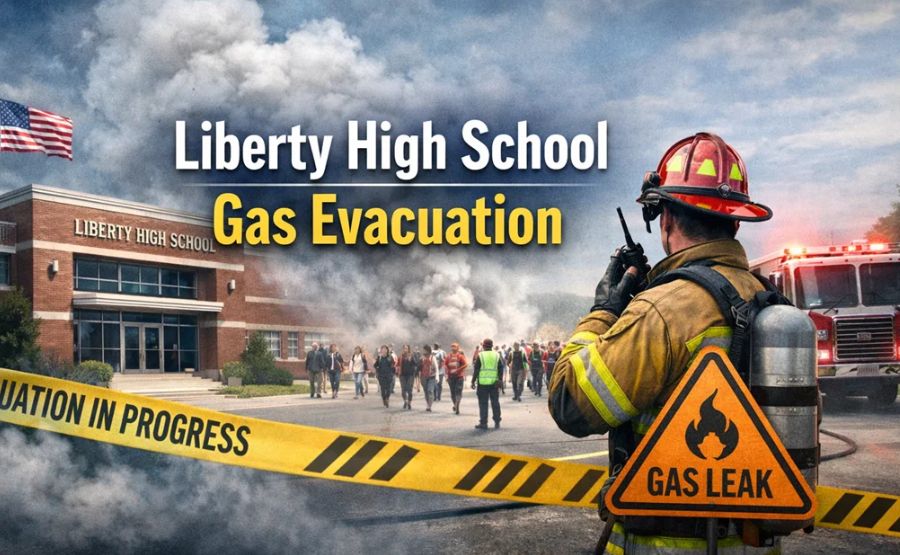
On a chilly morning that regarded regularity before everything, Liberty High School was all at once thrown into chaos. What started out as a small situation in one part of the construction quickly changed into a severe scenario that caused the liberty high school gas evacuation. Teachers, students, and a group of workers were forced to leave the campus within minutes, uncertain of what had happened or how excessive the trouble might be.
The incident left many parents concerned and looking for solutions. Emergency responders arrived rapidly, putting in place protection boundaries and running to become aware of the source of the gas trouble. Students gathered out of doors in confusion and fear, even as college officials tried to hold everyone calm and knowledgeable. What could have been an ordinary college day alternatively has become an effective reminder of the way speedy things can change.
As greater information got here out, it has become clear that this wasn’t only a one time coincidence. The Liberty high school gas evacuation revealed larger worries about building protection, safety structures, and preparedness in schools. Many humans started asking whether comparable dangers exist in different campuses. The occasion sparked conversations about more potent protection checks, higher emergency schooling, and clearer conversation between colleges and families.
In the stop, the situation served as a warning and a lesson. It confirmed how critical it is for schools to stay alert, ready, and proactive with regards to scholar safety.
A Normal Morning That Suddenly Turned Dangerous
The day began like some other at Liberty High School. Students arrived with backpacks slung over their shoulders, pals laughed in the hallways, and instructors prepared their first training of the morning. Nothing about the environment advised that something would go wrong. The habit felt calm, familiar, and absolutely regular.
That feeling modified rapidly after the primary bell rang.
Within minutes, a strong, ugly chemical smell started spreading via exceptional elements of the building. Some college students noticed it in their lecture rooms, others within the corridors, and a few near stairwells and commonplace areas. At first, many human beings shrugged it off, assuming it was temporary. A few concepts might be cleansing materials, nearby production, or trouble with the air device.
But the odor did no longer fade. Instead, it grew more potent.
Soon, students and instructors began feeling bodily unwell. Several mentioned dizziness, tightness in the chest, chronic coughing, and complications. Some felt nauseous, whilst others became tense and uneasy without fully knowing why. Conversations in lecture rooms shifted from schoolwork to challenge, as extra people found out something changed into truly now not normal.
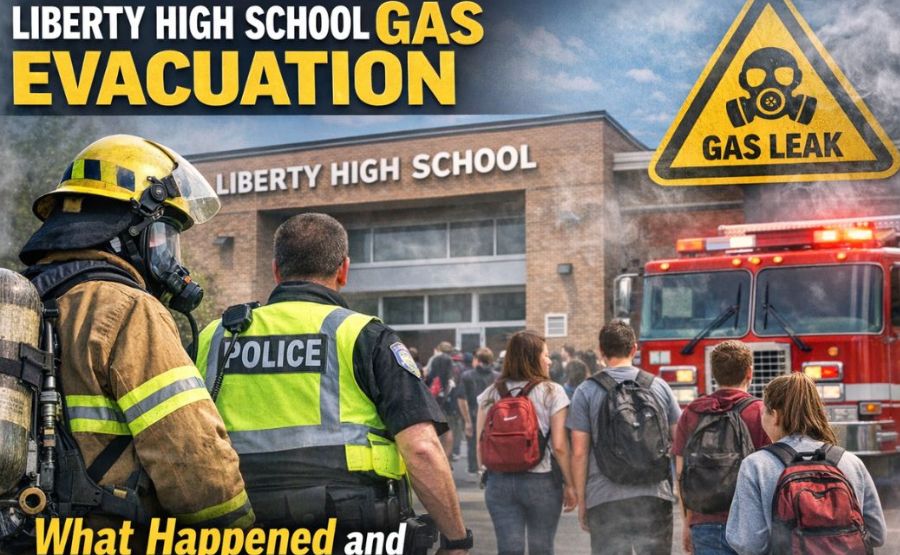
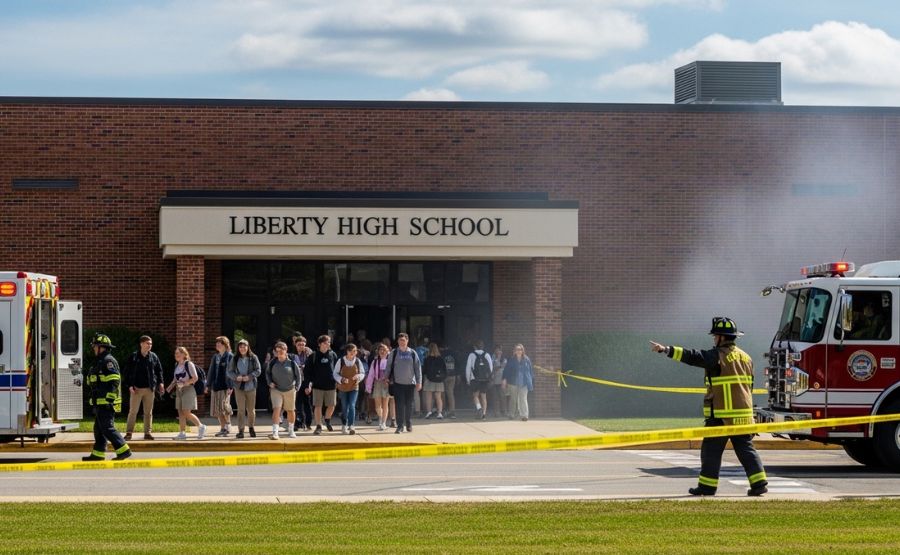
School directors quickly assessed the state of affairs and made a corporation decision to evacuate the construction straight away. Fire alarms have been activated, and teachers moved college students outdoors in an organized way. Within approximately fifteen mins, greater than 1,two hundred college students had been standing on the athletic fields and nearby parking areas, bundled in jackets, careworn, and involved about what turned into occurring inside their faculty.
Parents quickly began receiving messages, and plenty rushed in the direction of the campus. The occasion quickly became regarded within the community as the liberty high school gas evacuation, a daunting incident that would later raise extreme questions about constructing protection and emergency planning.
See also “Glasgow Water Main Break Shettleston Road Leads to Road Closures“
How First Responders Took Control of the Situation
Emergency teams arrived on the faculty very quickly after the evacuation started. Local firefighters, paramedics, and dangerous substances specialists reached the campus in beneath ten minutes. Their presence without delay delivered a feel of order to a chaotic scene.
Their first task was clear. They needed to confirm whether there has been a real fuel leak and, in that case, find its actual supply.
Specialized crews entered the building with a detection system to cautiously test school rooms, hallways, software rooms, and basement areas. They moved methodically, trying out air great and scanning for risky fuel degrees. After a radical inspection, they traced the hassle to the college’s basement near the relevant boiler gadget.
There, they located a broken herbal fuel pipe that was slowly corroding through the years. The weakened pipe eventually cracked, permitting gas to escape and spread through the college’s ventilation gadget. This explained why the smell and signs were pronounced throughout more than one area of the building in preference to simply one vicinity.
Technicians at once shut off the gas delivery and secured the affected vicinity. Medical teams evaluated college students and workforce outside, checking for respiration issues, dizziness, or other critical signs and symptoms. Thankfully, nobody required hospitalization.
Within some hours, officials confirmed that the state of affairs was absolutely contained and now not a chance. Still, the liberty high school gas evacuation left many families shaken and deeply concerned approximately whether or not habitual renovation had been treated properly.
In reaction, the school district introduced plans for stricter inspections, better tracking systems, and clearer emergency procedures. The incident served as an extreme wake up name about how vital regular safety checks are in older school buildings.
Voices from Those on the Frontlines
The liberty high school gas evacuation was extra than a habitual protection drill—it became a real, excessive-strain emergency that left lasting impressions on everybody concerned. Students, instructors, and personnel suddenly confronted a state of affairs that tested each their preparedness and composure.
Amanda Ruiz, a sophomore, remembered the moment with bright readability:
“We had been in science elegance when people started out coughing and feeling dizzy. Within seconds, the teacher advised us to leave the entirety and get outside at once. I didn’t even think about grabbing my smartphone. The hallways have been crowded and chaotic, and clearly, it turned into terrifying to see each person moving so speedy.”
For teachers like Mr. Dawson, the threat becomes recognizable almost right now:
“You never forget the odor of gasoline. At first, it was faint, however it quickly grew stronger. I’ve drilled emergency strategies regularly, but there’s a distinction among exercise and the real factor. It’s a moment that makes you recognize how susceptible we can be.”
Other students suggested feelings of confusion, tension, and concern for classmates who could have been extra laid low with the gasoline. Staff recalled how speedy they needed to act, guiding loads of students to protection even as they concurrently communicated with emergency responders.
These non-public money owed underscore the human facet of the liberty high school gas evacuation, displaying each worry and the quick thinking that prevented accidents. They additionally spotlight how crucial clean communique and calm management are at some point of emergencies in faculties.
Scrutiny on Infrastructure and Safety Preparedness
After the liberty high faculty fuel evacuation, the focal point shifted from on the spot protection to a broader assessment of the faculty’s infrastructure and emergency readiness. How should a serious gasoline leak arise disregarded in a building that hosts over a thousand college students day by day?
Liberty High School was constructed inside the early Nineteen Seventies and has seen multiple renovations. While a few updates centered on lecture rooms and facilities, the school’s middle mechanical structures, consisting of heating, air flow, and fuel traces, had not been fully modernized. A district file from years in the past referred to that those systems were getting old and might require replacement within 5 years. At the time, inspectors did not pick out any instant risk, leaving latent vulnerabilities in the area.
The gasoline leak induced district officers to release a complete inspection of all schools. Specialists examined fuel strains, HVAC structures, and boiler units to become aware of capacity risks. Several different campuses confirmed minor corrosion or wear, despite the fact that none posed a right away chance.
The incident emphasised the importance of proactive renovation and routine safety audits. It also sparked conversations about emergency training, speedy evacuation protocols, and the need for schools to have clean, practiced plans for worst-case scenarios. The liberty high school gas evacuation serves as a robust reminder that getting old infrastructure, even in nicely-used schools, requires constant vigilance to ensure the safety of students and the body of workers.
Psychological Impact on Students and Staff
Although no bodily accidents befell at some point of the liberty high school gas evacuation, the emotional and mental outcomes were large. Many students and the body of workers were left shaken by the enjoyment, and the disruption to everyday exercises had lasting effects.
In the weeks following the evacuation, college counselors have been stationed on campus to provide assistance. Absenteeism rose quite as college students struggled with anxiety approximately returning to school rooms. Some households, involved for his or her children’s proper-being, are selected to switch their children to close by schools temporarily or permanently.
Dr. Lynn Carver, an authorized college psychologist, discovered the mental pressure firsthand:
“The incident disrupted college students’ sense of safety. It’s no longer just about repairing a damaged pipe—it’s about restoring their confidence in being in a steady surroundings. Many college students experienced panic attacks, insomnia, and heightened pressure levels.”
Recognizing the significance of ongoing assistance, the district approved additional mental fitness assets. Programs blanketed group counseling sessions, one-on-one remedy alternatives, and workshops on managing anxiety after disturbing activities. The initiative emphasised that recuperation is as much about emotional reassurance as it is about physical safety.
Community Response and Engagement
The liberty high school gas evacuation sparked intense dialogue amongst dad and mom, educators, and neighborhood leaders. In the days following the incident, the network demanded transparency and duty. Parents attended school board conferences, seeking answers to crucial questions:
- Why had the corroded pipe long gone overlooked for you later?
- Were regular safety inspections honestly being performed?
- What measures are in place to prevent a similar occasion?
In response, the district released a public dashboard displaying actual-time updates on college infrastructure inspections, renovation schedules, and emergency preparedness. While the tool helped inform families, problems and scrutiny persisted.
Within days, a figure-led agency, Safe Schools Liberty, became hooked up. Their mission targeted on ensuring that all students in the district have a secure, modern-day mastering surroundings. The institution quickly became a riding pressure behind proposed nation law, advocating for obligatory annual third party inspections of all school gas lines, boilers, and heating structures.
The community mobilization tested that incidents like the Liberty High School gas evacuation extend beyond instantaneous safety. They spotlight the significance of obvious conversation, proactive preservation, and ongoing emotional support for both college students and groups of workers.
Lessons Learned and Lasting Change
The liberty high school gas evacuation proved to be an essential turning point, no longer best for the school but additionally as a lesson for academic institutions nationally. The incident highlighted vulnerabilities, tested preparedness, and ultimately sparked significant adjustments in protection protocols and infrastructure control.
Proactive Maintenance Cannot Be Overlooked
One of the clearest takeaways is that getting old faculty infrastructure demands constant interest. Routine inspections are handiest effective if findings result in well timed maintenance or replacements. The damaged gasoline pipes at Liberty High School were flagged years earlier, yet no movement was taken until the evacuation compelled a right away response. This underscores the want for ongoing finances making plans that prioritizes protection and replacement of crucial systems.
Emergency Preparedness Makes the Difference
Thanks to normal drills and a trained staff, the evacuation was achieved quickly and correctly. Students and teachers have been guided to protection with minimum confusion. The liberty high school gas evacuation verified that emergency preparedness isn’t only a requirement on paper—it is able to actually save lives.
Clear Communication Prevents Panic
In emergencies, incorrect information spreads quickly. Coordinated, timely updates from administrators helped maintain calm and avoided chaos from escalating. Families and personnel had been kept knowledgeable at every step, displaying that obvious verbal exchange is as essential as the bodily protection measures themselves.
Mental Health Support is Essential
While making sure bodily protection is the immediate precedence during a fuel leak, the incident also found out the importance of emotional restoration. Counseling offerings were deployed, and college students acquired steerage on handling tension, worry, and strain, emphasizing that mental guidance is a crucial part of crisis control.
Moving Forward: Rebuilding and Strengthening Safety
In the aftermath of the liberty high school gas evacuation, the college has taken concrete steps to improve protection and save you destiny incidents.
Construction crews changed the broken gasoline line right away, and the college’s HVAC gadget is being fully modernized. Advanced sensors have been installed to locate even minimum fuel leaks, and a “smart alert machine” now links faculty infrastructure at once with emergency responders in actual time.
The school board has additionally committed a special price range for district-huge enhancements, the usage of Liberty High School as a version for identifying potential vulnerabilities. Plans include changing old systems, engaging in normal 0.33-birthday party inspections, and imposing new protection technology.
Additionally, there are discussions approximately developing a pupil-led protection council. This council would collaborate with school officers to monitor safety worries, boost attention, and make sure that emergency drills are practical and effective. By involving students without delay, the college ambitions to foster a way of life of protection and obligation across the campus.
The liberty high school gas evacuation has left a lasting impact, reworking the approach to safety, infrastructure management, and mental health support. It serves as a model for colleges anywhere, displaying that preparedness, vigilance, and community engagement are crucial for shielding college students and staff.
A Day That Changed the School and Community
Although nobody was physically harmed, the liberty high school gas evacuation left a profound and lasting impact on college students, personnel, and the wider community. What started out as a normal school day brief turned into a real-life take a look at emergency preparedness, revealing both vulnerabilities in infrastructure and the importance of swift, coordinated movement.
The incident underscored the hidden risks of ageing homes, displaying how something as routine as a renovation oversight could beautify proper into an in all likelihood dangerous situation. It also highlighted the short wandering and self-control of teachers, administrators, and first responders who ensured that every student became evacuated effectively.
Beyond the straight away response, the evacuation discovered the power and resilience of the Liberty High School network. Students, parents, and a group of workers got here together, supporting every different through the uncertainty and tension that was observed. The occasion has grown to be a catalyst for trade, prompting enhancements to infrastructure, superior safety protocols, and more appropriate mental fitness resources for those affected.
For Liberty High School, the day became greater than an emergency—it has become a defining second. It bolstered the need to prioritize safety, hold vigilance, and ensure that colleges are prepared for any eventuality. The schooling found out from the liberty high school gas evacuation are probably to influence practices no longer just at this campus, but across academic institutions seeking to protect their college students and workforce for years to come.
Conclusion
The liberty high school gas evacuation became greater than an emergency—it turned into a warning call for students, a group of workers, parents, and the entire district. While no one was bodily harmed, the incident found out vulnerabilities in getting older infrastructure, emphasised the significance of emergency preparedness, and highlighted the need for each bodily and highbrow fitness assist.
The rapid response of school officials and number one responders averted what might have been a much more severe state of affairs, even as the network’s engagement demonstrated the power of collective motion and obligation. Since the event, the faculty has upgraded its structures, carried out a superior safety era, and strengthened protocols to make sure that students and groups of workers are better covered within the destiny.
Ultimately, the liberty high school gas evacuation stands as a reminder that vigilance, proactive maintenance, clear conversation, and community involvement are crucial to maintaining faculties secure. It has transformed how the school and district approach protection, growing a model that extraordinary instructional institutions can take a look at to shield their university students and workforce for future years.
FAQs
1. What caused the Liberty High School gas evacuation?
A corroded herbal gasoline pipe in the school’s basement leaked, spreading fuel through the air go with the flow system and triggering the evacuation.
2. How were students and staff evacuated?
Fire alarms were activated, and instructors guided college students to secure outside areas. Over 1,200 college students had been evacuated lightly within 15 minutes.
3. Were there any injuries?
No one becomes bodily injured. Some cited dizziness, nausea, and slight breathing ache, but all had been assessed on-net web sites by scientific corporations.
4. What safety measures were taken after the incident?
The damaged pipe changed, HVAC systems upgraded, gasoline sensors installed, and a clever alert system associated the faculty with emergency responders.
5. How did the incident affect students emotionally?
Many university college students are skilled in tension and strain. Counselors were deployed, and highbrow health guides became furnished to assist college students and employees get higher.
Read more about Blog At Phrasecave
 Backlinks Hub