
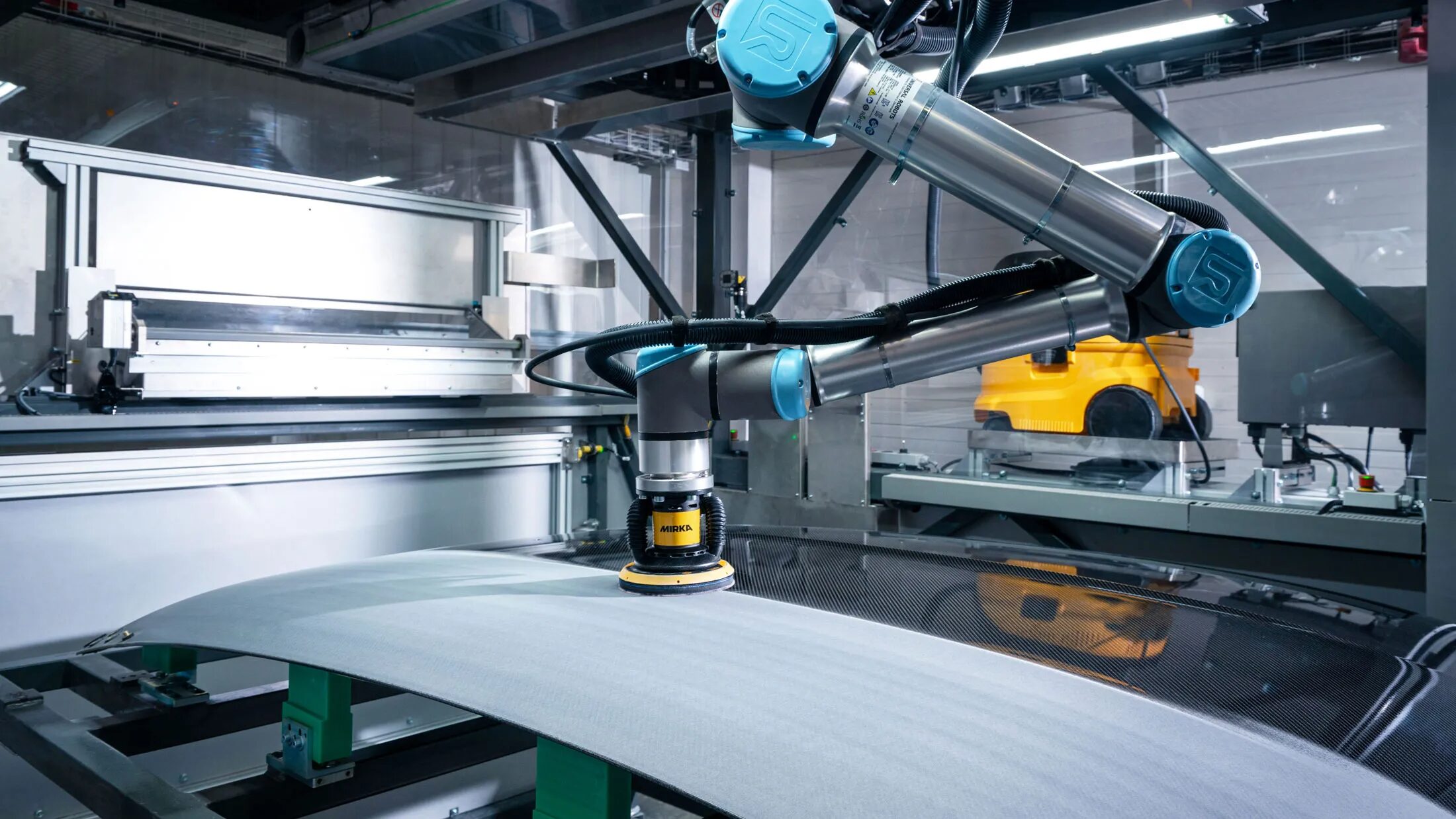
In today’s fast-paced manufacturing landscape, precision, efficiency, and consistency are more critical than ever. Traditional manual finishing processes are no longer sufficient to meet the high-quality demands of industries such as automotive, aerospace, and metal fabrication. This is where robotic surface finishing solutions come into play—offering advanced automation for grinding, polishing, and deburring processes.
Robotic polishing and finishing technologies are designed to replace labor-intensive manual work with highly accurate, repeatable, and efficient automated systems. These solutions not only improve product quality but also enhance productivity, reduce costs, and ensure workplace safety.
What is Robotic Surface Finishing?
Robotic surface finishing refers to the use of industrial robots to perform tasks such as grinding, polishing, and deburring on various materials. These robots are equipped with advanced tools and sensors that allow them to control force, movement, and precision during operation.
Unlike manual processes, robotic systems can maintain consistent quality across large production volumes. They are capable of handling complex geometries and hard-to-reach areas with ease. According to industry insights, robotic finishing systems deliver improved productivity, reduced cycle times, and consistent surface quality even in continuous operations.
Key Robotic Finishing Processes
1. Robotic Deburring
Burrs—unwanted sharp edges or material residues—are a common byproduct of machining and manufacturing processes. Removing these imperfections is essential for both functionality and safety.
With Robotic Deburring, manufacturers can automate the removal of burrs with high precision. Robotic systems ensure that every edge is smooth and uniform, reducing the risk of defects and improving the final product quality.
Robotic deburring is widely used in industries like automotive manufacturing, where components such as engine parts and metal castings require flawless finishing. Automated deburring not only enhances accuracy but also significantly reduces labor costs and human error.
2. Robotic Grinding
Grinding is a critical step in surface finishing that involves material removal to achieve the desired shape, dimension, or smoothness. Manual grinding can be inconsistent and physically demanding, making automation a preferred solution.
Robotic Grinding systems are designed to deliver precise and repeatable results. These systems use advanced force-control technology to maintain consistent contact between the tool and the workpiece, ensuring uniform material removal.
Robotic grinding is commonly used for weld seam removal, surface leveling, and preparation for polishing. It also reduces abrasive consumption and minimizes waste, making it a cost-effective solution for manufacturers.
3. Robotic Polishing
Polishing is the final step in achieving a smooth, shiny, and aesthetically appealing surface. It is especially important in industries where surface finish directly impacts product performance and visual appeal.
With Robotic Polishing, manufacturers can achieve high-quality finishes with minimal variation. These systems are capable of handling delicate surfaces and complex shapes, delivering consistent results across all parts.
Robotic polishing is not only used for aesthetic purposes but also for improving corrosion resistance and reducing friction in mechanical components. By automating this process, companies can ensure superior quality while reducing production time.
Benefits of Robotic Finishing Solutions
1. Consistent Quality
Robots operate with high precision and repeatability, ensuring uniform results across every product. This eliminates inconsistencies commonly associated with manual labor.
2. Increased Productivity
Automated systems can operate 24/7 without fatigue, significantly increasing output and reducing production time.
3. Cost Efficiency
By reducing labor costs, minimizing material waste, and improving efficiency, robotic solutions provide a strong return on investment.
4. Enhanced Safety
Surface finishing tasks are often hazardous due to dust, noise, and repetitive motions. Robotic automation removes workers from dangerous environments, improving workplace safety.
5. Flexibility & Scalability
Modern robotic systems can be easily programmed and adapted to different tasks, making them suitable for a wide range of applications and industries.
Applications Across Industries
Robotic polishing and finishing solutions are widely used across multiple industries, including:
- Automotive (engine components, body panels)
- Aerospace (precision parts, turbine components)
- Medical devices (surgical instruments)
- Metal fabrication (custom parts, castings)
- Consumer goods (appliances, decorative items)
These industries rely on robotic systems to maintain high standards of quality while meeting increasing production demands.
The Future of Surface Finishing
As automation technology continues to evolve, robotic surface finishing is becoming more intelligent and efficient. Advanced features such as AI-driven control systems, real-time feedback, and adaptive force control are enabling robots to perform even more complex tasks with greater accuracy.
The shift toward Industry 4.0 is further accelerating the adoption of robotic finishing solutions, allowing manufacturers to integrate automation seamlessly into their production lines.
Conclusion
Robotic polishing and surface finishing solutions are transforming the manufacturing industry by delivering unmatched precision, efficiency, and consistency. From deburring and grinding to final polishing, these technologies provide a complete solution for achieving high-quality surface finishes.
By investing in robotic automation, businesses can not only improve product quality but also gain a competitive edge in today’s demanding market.
 James James
  Ghulam Murtaza khanlinkbuilders