

Air travel runs on detailed making plans, yet even nicely organized flights can exchange routes without caution. The United Flight UA109 Diversion has become a topic of public hobby after the plane changed into redirected for the duration of its transatlantic adventure. A diversion manner the flight lands at a exceptional airport than at first scheduled, a decision made simplest when safety or operational desires require it. While sudden, such movements are a part of fashionable aviation tactics designed to defend all and sundry on board.
Diversions can happen for numerous reasons, which includes clinical situations, climate concerns, or technical signals that need closer inspection. Airlines perform beneath strict safety regulations set by the aviation government, and flight crews are educated to respond promptly and professionally. In instances just like the United Flight UA109 Diversion, pilots work closely with air visitors and floor operations groups to pick the safest and maximum practical alternative airport.
For passengers, a sudden course alternate can experience unsettling. However, airlines prioritize clean communique and submit touchdown aid, such as rebooking assistance and up to date journey arrangements. Events just like the United Flight UA109 Diversion spotlight how layered protection structures in cutting-edge aviation are designed to manage challenges efficiently, even if plans trade mid flight.
What Is United Flight UA109 Diversion?
The United Flight UA109 Diversion refers to an incident wherein United Airlines Flight UA109, a scheduled lengthy haul issuer working among Newark Liberty International Airport within the United States and London Heathrow within the United Kingdom, became required to land at a trade airport rather than finishing its planned route. In commercial aviation, a diversion is a based safety decision, not a peculiar shortcut. It is initiated at the same time as continuing to the true vacation spot may additionally need to give risk or put off pressing help.
Airlines characteristic inside strict regulatory frameworks mounted by the usage of aviation government in each departure and holiday spot international locations. When a diversion takes place, pilots follow documented strategies that contain consultation with airline dispatch groups, protection management, and air web page visitors control. These picks are supported by means of actual time plane device tracking, climate assessment, gas calculations, and chance exams. The United Flight UA109 Diversion displays how aviation systems are designed to respond right now while situations exchange, even mid flight over international airspace.
While diversions can create inconvenience for tourists, they are proof of layered safety protections operating as intended. Every commercial plane is ready with advanced diagnostic structures, and flight crews whole recurrent simulator education to prepare for clinical, technical, and operational emergencies.
See also “Google Ads for Doctors SEO Outline: Proven Tactics for Higher Visibility“
What Caused the United Flight UA109 Diversion?
The United Flight UA109 Diversion turned into reportedly brought about by using a clinical emergency regarding a passenger onboard. Medical activities at cruising altitude present specific demanding situations because getting admission to complete clinic care is not right now available. Cabin group participants are educated in first aid, CPR, and the use of onboard emergency clinical systems, which include defibrillators and better clinical kits required on global routes.
When an extreme scientific situation develops during flight, pilots must evaluate numerous factors. These encompass the severity of the passenger’s situation, final flight time to the authentic destination, the provision of appropriate trade airports, climate situations at the ones places, and gas reserves. In many instances, airways additionally seek advice from ground based totally clinical help offerings that provide professional steering to the crew in actual time. If continuing the adventure could delay vital treatment, diversion will become the safest alternative.
In the case of the United Flight UA109 Diversion, the choice to reroute demonstrated a precautionary technique centered on passenger welfare. There were no large reviews indicating that weather or mechanical failure contributed to the occasion. Instead, the situation underscored how airlines prioritize human protection above operational timelines.
Medical diversions are a few of the maximum commonplace reasons lengthy haul flights change course. According to aviation industry information, crews frequently go through situation based totally education to manipulate those events correctly even as retaining calm cabin verbal exchange. The United Flight UA109 Diversion serves as a realistic instance of how protection protocols, group preparedness, and coordinated decision making guard passengers, even lots of feet above the ocean.
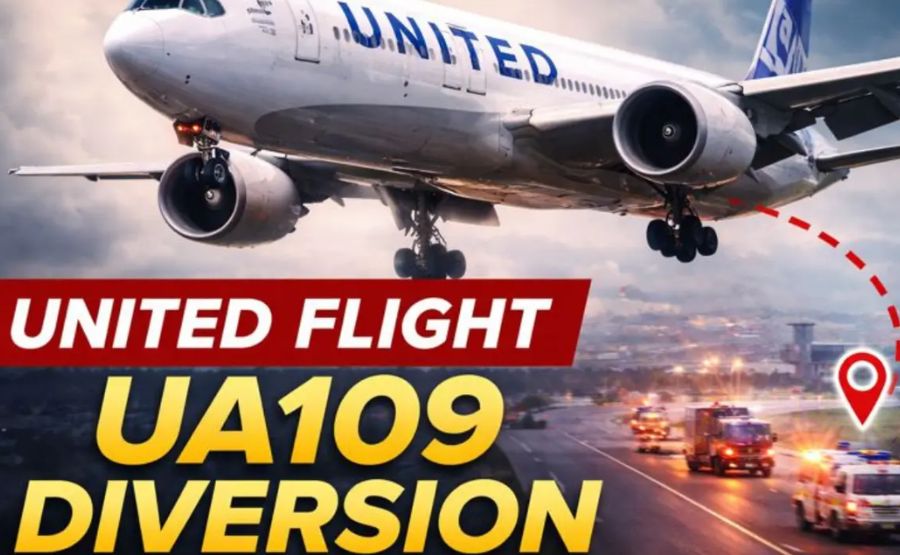
Crew and Passenger Response During United Flight UA109 Diversion
The United Flight UA109 Diversion tested each crew and passenger preparedness in actual time. From the moment the choice to divert became made, the flight group acted swiftly and methodically. Pilots coordinated with air site visitors to manipulate and airline operations, ensuring a safe reroute to the change airport. Meanwhile, the cabin team focused on passenger safety, educating tourists to remain seated and securely buckled, at the same time as calmly explaining the state of affairs and supplying updates throughout the flight.
Flight attendants also worked to keep consolation and reduce stress all through the unscheduled exchange. Water and snacks have been provided, and the group maintained a constant, reassuring presence inside the cabin. Their professionalism and adherence to safety protocols verified the sizable training and enjoyment that airline groups of workers acquire for unexpected activities like diversions.
Passengers responded with incredible composure and cooperation. Many supported each different via conversation and reassurance, fostering a feel of calm amid uncertainty. Some shared updates and photographs on social media, not handiest documenting the fun but also connecting with others following the flight’s story. This mutual help, combined with the team’s green management, helped turn a doubtlessly nerve-racking scenario into an illustration of teamwork and resilience.
Aftermath and Passenger Reactions to United Flight UA109 Diversion
Following the steady touchdown throughout the United Flight UA109 Diversion, passengers experienced an aggregate of comfort and gratitude. What started as a sudden and potentially annoying state of affairs ended with reassurance thanks to the group’s easy communique and expert coping skills. Flight attendants persisted to provide guidance after landing, helping passengers with connecting flights, baggage, and any right now desires, which further strengthened self perception in United Airlines’ operational protocols.
Many travelers shared their appreciation for the pilots’ fast choice-making, noting that prioritizing protection over time table showed the airline’s dedication to passenger welfare. Passengers additionally contemplated on how the cabin team maintained calm and transparency during the diversion, addressing concerns and answering questions as they arose. This level of hobby helped lessen anxiety and stored the cabin surroundings composed irrespective of the uncertainty.
Once on the ground, social media became a channel for passengers to share their research. Travelers published updates, photos, and personal money owed of the incident, highlighting each the professionalism of the group and the supportive behavior of fellow passengers. The responses underscored the collaborative attempt amongst organization and tourists, showing how quick questioning, preparedness, and human team spirit come collectively at some point of in-flight emergencies just like the United Flight UA109 Diversion.
How Airlines Manage Similar Incidents
Air excursion consists of many variables, and diversions are a recurring part of managing sudden conditions successfully. Causes can range from scientific emergencies to mechanical issues or excessive climate. Airlines rely on experience and established protocols to reply briefly and limit risk. Over time, the ones responses have developed into hooked up processes that prioritize passenger protection while retaining smooth verbal exchange.
For instance, a Singapore to London flight had to divert because of engine complications. The pilots and cabin institution maintained calm, regularly updating passengers on the situation and expected actions. This openness helped lessen pressure and saved passengers informed in some unspecified time in the future of the diversion. In every other case, a long haul worldwide flight encountered intense turbulence. Crew members effectively secured the cabin, guided passengers on brace positions, and ensured protection measures had been found.
These beyond incidents show that clean communication, quick selection-making, and team preparedness are crucial to coping with mid-flight emergencies. Airlines now educate crews substantially for such conditions, emphasizing coordination, passenger reassurance, and adherence to protection rules. Lessons from preceding diversions have fashioned present-day aviation practices, allowing crews to deal with occasions just like the United Flight UA109 Diversion with professionalism and performance.
Safety Protocols Followed During United Flight UA109 Diversion
The United Flight UA109 Diversion became managed beneath strict aviation safety protocols designed to defend each passenger and crew during surprising activities. When the pilots recognized the need to divert, their first step became to communicate with the airline’s operations center and air traffic control. Together, they assessed capability trade airports, considering runway duration, airport equipment, air visitors, and prevailing climate conditions. This ensures that the plane should land correctly without risking gas shortages or operational complications.
Inside the cabin, the team right away carried out pre-landing approaches. Passengers have been informed to remain seated with seat belts securely fastened, unfastened items have been stowed, and scientific devices become organized in case the emergency requires instant interest. Flight attendants additionally conducted protection checks, proving that emergency exits were unobstructed, and ensured verbal exchange devices were ready for coordination with the cockpit.
Advanced aircraft tracking structures furnished real-time facts on engine overall performance, altitude, and velocity, allowing pilots to make particular adjustments all through the diversion. The aggregate of technological assistance, strict protocols, and skilled selection-making minimized dangers and allowed the team to manipulate the scenario correctly.
Finally, these measures highlight the significance of aviation guidelines and standardized strategies. Every step taken at some point of the United Flight UA109 Diversion changed into guided through international protection requirements, demonstrating how careful making plans and execution maintain safety even in unexpected circumstances.
Role of Cabin Crew in Maintaining Order
The cabin group played a valuable role in making sure passenger protection and comfort at some point of the United Flight UA109 Diversion. Beyond the usual duties of serving passengers, the group became the primary point of reassurance and steerage. They communicated updates about the diversion clearly and evenly, explaining the motives behind the route exchange and the anticipated landing approaches. This transparency helped lessen fear and uncertainty among vacationers.
Crew participants monitored compliance with protection measures, making sure all passengers remained seated with seat belts mounted and that overhead packing containers and free items were secured. They also attended to passengers with clinical desires, checked on those feeling tense, and allotted water or different materials to maintain consolation in the course of the sudden reroute.
The cabin team acted as a vital link among the cockpit and passengers, relaying important instructions whilst preserving calm and order. Their presence and professionalism created an established environment that reassured passengers and prevented panic.
Overall, the team’s overall performance in the course of the United Flight UA109 Diversion highlighted the significance of human judgment, training, and interpersonal talents in dealing with excessive-pressure eventualities, showing how education and empathy paintings hand in hand to preserve protection.
How Airlines Train for Emergency Diversions
Airlines make investments closely in making ready crews for emergencies like the United Flight UA109 Diversion. Pilots and cabin groups of workers undergo regular simulator schooling that replicates actual-international situations, along with clinical emergencies, mechanical issues, extreme turbulence, and sudden weather. These simulations train crews to make brief, correct selections beneath pressure even as coordinating with more than one department.
Training packages emphasize verbal exchange, both among cockpit and cabin team and with passengers. Cabin team practice coping with passenger tension, educating on protection measures, and managing in-flight scientific situations. Pilots, meanwhile, rehearse navigation changes, gas control, and verbal exchange with air traffic control beneath emergency conditions.
Airlines also run recurrent drills to reinforce teamwork between cockpit and cabin workforce. These exercises consciousness on maintaining order, adhering to protocols, and mitigating risks while keeping passenger welfare the pinnacle priority.
By combining technical abilties, state of affairs-based total simulations, and real-existence enjoyment, airline crews are prepared to reply to diversions like the United Flight UA109 Diversion correctly. This great coaching guarantees that protection is by no means compromised, even at some stage in surprising events at excessive altitude.
Communication Strategies During the Diversion
Effective verbal exchange was a key component in coping with the United Flight UA109 Diversion. Both cockpit and cabin crews prioritized maintaining passengers knowledgeable to reduce uncertainty and anxiety. Announcements have been made at everyday durations, presenting updates on the cause for the diversion, the anticipated landing time, and instructions for protection strategies.
In addition to in-flight verbal exchange, the crew coordinated with a ground group of workers on the trade airport to ensure that passengers could acquire instantaneous assistance upon touchdown. This protected arrangements for scientific attention, bags handling, and onward travel coordination. Passengers who remained informed throughout the diversion suggested feeling more confident and less pressured.
The airline’s obvious communication also extended to external channels. After touchdown, passengers shared updates on social media, even as authentic airline channels confirmed the diversion and reassured the public that protection protocols have been accompanied. This technique reinforced acceptance as true within the airline and proven responsibility in dealing with sudden occasions.
Clear and consistent communication for the duration of the diversion highlighted how information, whilst introduced responsibly, can help passengers feel stable even at some point of disturbing situations at 35,000 feet.
Passenger Experience and Impact During United Flight UA109 Diversion
The United Flight UA109 Diversion had a sad impact on passengers, highlighting both the demanding situations of surprising events in air travel and the significance of expert team control. As the plane modified route mid-flight, many vacationers experienced a surge of tension, that’s a herbal response when plans are disrupted hundreds of toes above floor. Concerns ranged from personal protection to concerns about overlooked connections, resort bookings, and onward tour preparations. For some, the uncertainty created an aggravating cabin environment that required cautious interest from the group.
The cabin team’s position has become important in preserving calm and order. Flight attendants supplied continuous updates, explained the reasons for the diversion in clean phrases, and reassured passengers that each movement changed into being taken to ensure protection. They also attended to consolation, dispensing refreshments and checking on passengers who wanted extra support. This steady conversation and visible professionalism helped lessen panic and fostered belief between passengers and airline staff.
Once the flight landed accurately, passengers pondered at the revel in an extra element. Many praised the group’s short choice-making, emphasizing that prioritizing passenger welfare over scheduled delays demonstrated a commitment to safety principally. Social media is speedy full of firsthand debts, photographs, and reflections, showing a mix of alleviation, gratitude, and statements on the challenges of air travel. The United Flight UA109 Diversion serves as a reminder of ways unpredictable situations can be managed correctly whilst team information, clear communication, and passenger cooperation come collectively.
Lessons Learned from United Flight UA109 Diversion
The United Flight UA109 Diversion underscores the significance of training, schooling, and flexibility in modern-day-day aviation. Every diversion offers airways with insights that enhance protection strategies, organization coordination, and passenger manipulation for future incidents.
One key takeaway is the fee of proactive organization education. Both pilots and the cabin body of workers must be prepared to answer to emergencies which could upward thrust up without warning, whether or not they are clinical, mechanical, or environmental. Regular drills and state of affairs-based totally completely sports activities make sure that crews can act decisively and preserve calm below stress.
Another lesson is the characteristic of effective passenger communique. Keeping travelers knowledgeable and engaged reduces anxiety and fosters cooperation, which in turn lets in crews to execute safety protocols extra effectively.
Finally, the incident highlights the resilience of passengers and crews working together. Human factors, which include empathy, teamwork, and smooth conversation, are in fact as essential as technical measures in correctly handling diversions. The United Flight UA109 Diversion serves as a version for the way safety, professionalism, and preparedness combine to protect sincerely everybody on board in some unspecified time within the future of unpredictable situations.
Conclusion
The United Flight UA109 Diversion serves as a clean instance of the manner modern aviation balances safety, professionalism, and versatility even as unexpected conditions arise. From the instant the choice to divert changed into made, the coordinated efforts of pilots, cabin group, and ground operations ensured that each passenger remained constant and knowledgeable. The incident highlights how advanced plane systems, strict safety protocols, and rigorous organization training art work collectively to manipulate emergencies effectively.
Passengers performed a similarly important function through final calm, cooperating with instructions, and supporting each other at some stage in the flight. Their responses, combined with the organisation’s professionalism, illustrate the human detail in aviation safety—where smooth communication, empathy, and teamwork are really as essential as technical knowledge.
Ultimately, the United Flight UA109 Diversion demonstrates that even though plans exchange mid-flight, passenger welfare stays the top priority. It reinforces the importance of preparedness, transparency, and resilience in air adventure, reminding each tourists and airways that protection is continually at the leading edge, no matter the times.
FAQs
1. What is United Flight UA109 Diversion?
The United Flight UA109 Diversion happened whilst Flight UA109, scheduled from Newark to London Heathrow, became rerouted to a brilliant airport. Diversions appear for safety or operational reasons, which encompass medical emergencies, technical troubles, or climate, to make certain passenger and crew safety.
2. What caused the United Flight UA109 Diversion?
The flight has come to be diverted due to a systematic emergency associated with a passenger. Pilots took into consideration the severity of the situation, nearest appropriate airports, climate, and gasoline stages. The desire prioritized passenger protection, without any opinions of mechanical or climate troubles.
3. How did the crew handle the diversion?
Pilots coordinated with air internet website site visitors control to pick the most secure exchange airport, at the same time as cabin institutions ensured passengers remained seated, solid, and informed. Crew people supplied updates, attended to clinical needs, and maintained calm, showing the effectiveness of education and protocols.
4. How did passengers respond during the diversion?
Passengers remained calm and cooperative, assisting every different and following agency instructions. Many shared updates on social media, documenting the occasion whilst fostering a level in the network, turning a disturbing situation into an instance of teamwork and resilience.
5. What lessons does the United Flight UA109 Diversion provide?
The incident highlights the significance of schooling, clear verbal exchange, and teamwork in aviation. It suggests how airways balance era, human judgment, and empathy to prioritize passenger safety at some point of sudden conditions.
Read more about Blog At Phrasecave
 Backlinks Hub